Private credit
The Bathla collapse: what it means for private credit investors
A major Sydney developer's administration in August 2026 exposed around 40 private credit funds and triggered a wave of redemption limits. Here is what happened, who was exposed, and why the type of loan mattered more than the size.

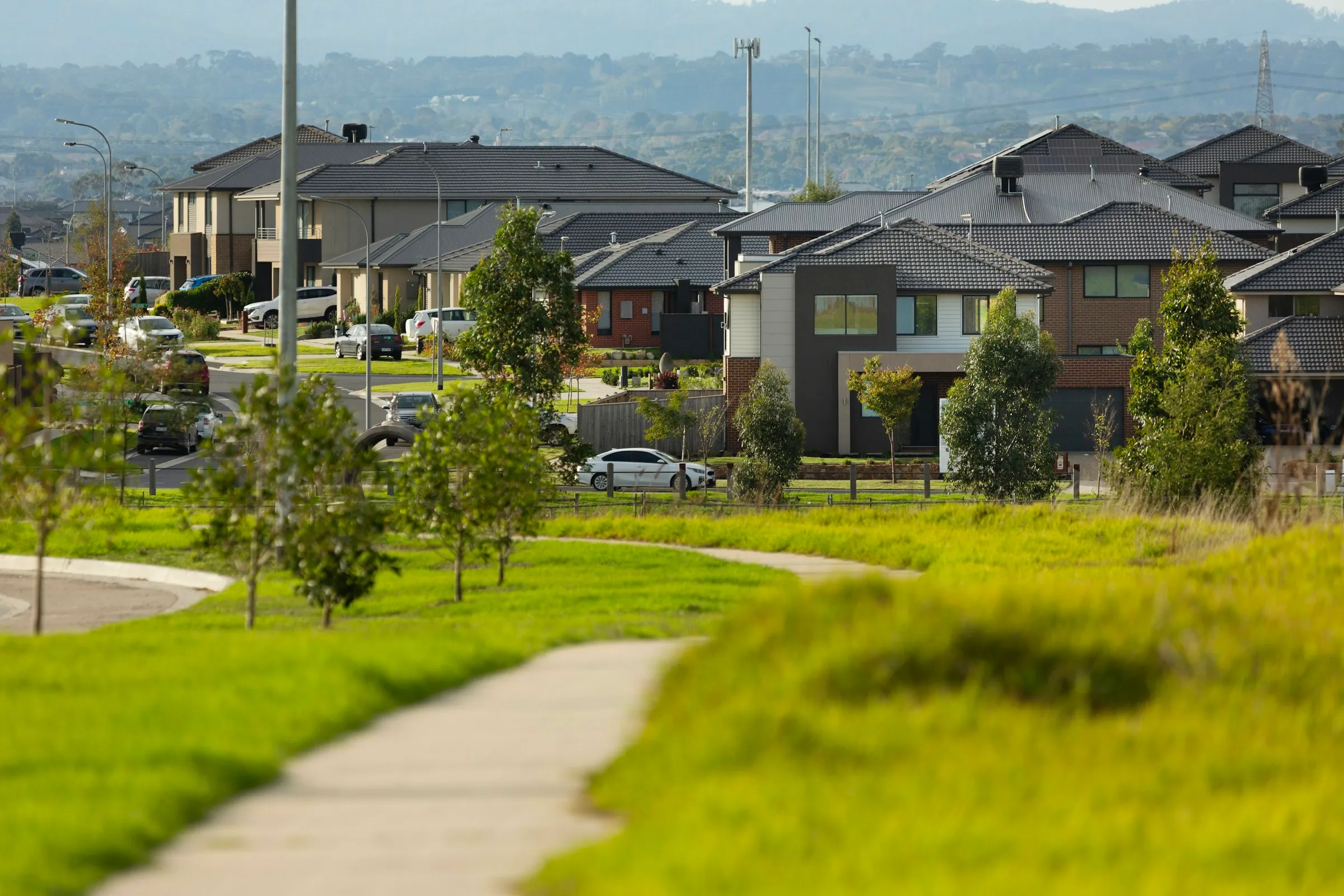
Bathla Group, a Sydney residential developer, entered voluntary administration on 25 August 2026. Its parent group owed about $3.2 billion, mostly to private credit funds, and the loans were largely for construction, land and unsold stock. Around 40 funds were exposed, and several limited redemptions. The lesson for investors is about loan type, not just loan size.
Bathla is not the first developer to fail and will not be the last. What made it significant was how much of its debt sat with private credit funds that many everyday and wholesale investors hold, and how quickly those funds felt it.
What happened to Bathla Group?
| Date | Event |
|---|---|
| 30 June 2025 | Parent Universal Property Group reports about $3.2 billion in liabilities, the majority reportedly owed to private credit |
| 17 August 2026 | Centuria Bass pauses redemptions on two credit funds |
| 25 August 2026 | Bathla Group enters voluntary administration; Teneo appointed |
| Late August 2026 | 360 Capital enters a trading halt to assess its Bathla loans; MA Financial caps withdrawals at 1% a month |
| 28 August 2026 | CVS Lane suspends redemptions on its funds, citing uncertainty around the Bathla administration |
Bathla’s managing director described “a perfect storm”: significant softening in sales, the effects of federal Budget changes, falling confidence in key markets and significant increases in construction costs. The group’s pipeline reportedly ran to 22,000 apartment dwellings and 3,500 homes.
Which funds were exposed to Bathla?
Around 40 private credit funds reportedly lent to Bathla, with exposures ranging from $1.5 million to $340 million. Those that disclosed details included:
| Manager | Reported exposure | Response |
|---|---|---|
| 360 Capital | Two first-mortgage loans totalling about $18.3 million | Trading halt; said it expected full recovery |
| Centuria Bass | Six Bathla assets: two construction loans close to completion, the rest residual stock and land loans | Paused redemptions on two credit funds, expected to last two to six months |
| CVS Lane | Nine loans across its two funds, which manage about $2.1 billion | Suspended applications and redemptions; to reassess by 31 October 2026 |
| La Trobe Financial | Less than 0.15% of its book, through first mortgage loans | No change reported |
| MA Financial | No exposure | Capped withdrawals at 1% a month as a precaution |
Two points stand out. First, exposure was spread widely, so many investors who had never heard of Bathla were affected through their funds. Second, even a manager with no exposure gated, because a fall in confidence hits every pooled fund at once. We explain that dynamic in what is a redemption freeze.
Why are construction, land and unsold-stock loans riskier?
Seen from the lender’s side, these loans stack several risks on top of one another. None is unusual on its own. Together, in a softening market, they compound.
Cost blowouts. Construction costs are now 51% above pre-COVID levels. A fixed-price budget set two years ago may no longer complete the building. Someone has to fund the gap, and if the developer cannot, the lender faces a half-finished asset.
Approval risk. Development approvals carry conditions and time limits. If a project stalls, approvals can lapse or need renegotiating, which reduces what a site is worth to the next buyer.
Completion risk. Until the building is finished, the security is worth much less than the end product. If a builder fails, the lender may have to fund completion itself or sell an unfinished project at a steep discount.
Sales risk. Repayment depends on selling units into whatever market exists at completion. Buyers who signed off-the-plan contracts may not settle if values fall.
Valuation lag. Values set at loan approval can trail the market. ASIC warned in June 2026 about valuations lagging economic reality, as weaker borrower conditions raised the risk that reported values no longer reflected what loans were really worth.
What are construction, land and residual stock loans?
These are the three loan types that made up most of the Bathla exposure, and it helps to be precise about each.
A construction loan funds the building of a project in stages, with money released as work is completed. The lender’s security is the site plus whatever has been built so far.
A land loan funds the purchase or holding of a development site, often before building starts. Repayment usually depends on the land being developed, sold or moved onto a construction loan.
A residual stock loan is lent against completed but unsold units at the end of a project. It gives the developer time to sell, and the lender is repaid as each unit settles.
All three depend on a project succeeding and on buyers turning up. None is secured by an established property with a current market and a clear exit today.
How does a falling market make this worse?
National home values were 3.6% below their March 2026 peak by August, and Sydney was down 7.1% from its February peak, according to Cotality. Those are modest falls for an established home with plenty of equity. They are a much bigger problem for a lender whose repayment depends on selling hundreds of new apartments into the same market, often at prices set in a stronger one.
Land and unsold-stock loans have a related problem. A land loan is repaid only when the land is developed or sold, and land values can move sharply when developers stop buying. A loan against unsold completed units depends on clearing stock that the market has already shown it does not want at the original price.
That is why, when a large developer fails, the damage lands on its construction and land lenders first.
Is Bathla a sign of wider private credit trouble?
It is a sign of where the risk in Australian private credit sits. More than half of the market is real-estate debt, mostly lending to developers. ASIC Deputy Chair Sarah Court described the August gates as “the first significant cracks” in the sector.
The outcome for individual funds will depend on their loans. A lender with a small, first-mortgage exposure to a nearly completed project, such as La Trobe’s reported position, is in a very different place from one with large land or stalled-construction loans. Our private credit guide explains how the different parts of the market work.
What should investors in exposed funds do?
If you hold units in a fund with Bathla exposure, ask the manager four things in writing: the size of the exposure as a share of the fund, whether each loan is a first or second mortgage, how far each project is from completion, and when the loans were last independently valued. Our practical guide on getting money out of a mortgage fund covers redemption rights and hardship withdrawals.
Why doesn’t HomeSec lend on construction or development?
Because the risks above are hard to control from the lender’s seat, and they compound when markets turn. HomeSec Business Finance, an Australian private lender founded in 2004, made that a rule: no development loans and no construction loans.
Instead it lends short term business loans of 1 to 12 months, for legitimate business or investment purposes, secured by registered first and second mortgages over existing Australian real estate. The security is a finished property that can be valued today and sold if needed. LVRs are capped at 80% on residential property and lower on commercial, leaving an equity buffer. HomeSec avoids unusual properties or anything that would take a long time to sell. The full list is on our lending rules page.
| Risk | Construction, land and unsold-stock loans | HomeSec co-funded loans |
|---|---|---|
| Security | Unfinished building or undeveloped land | Existing Australian real estate |
| Cost blowouts | Direct exposure | Not applicable; nothing to build |
| Completion risk | Yes | No |
| Repayment source | Sale of stock into a future market | Borrower repays at maturity; if not, the lenders can sell a finished property |
| Term | Often years | 1 to 12 months |
| Manager’s own money | Varies | HomeSec co-invests in every loan |
Co-funding with HomeSec also means you are named on the registered mortgage for your exact contribution and choose each loan from its due diligence pack. Returns are 12% to 18% p.a. on the loans you choose. If you’d like to see what a loan secured by an existing property looks like, register your interest and our Funding Manager will be in touch.
Frequently asked questions
What happened to Bathla Group?
Bathla Group, a Sydney residential developer, entered voluntary administration on 25 August 2026, with Teneo appointed as administrator. Its parent, Universal Property Group, reported about $3.2 billion in liabilities as at 30 June 2025, mostly owed to private credit funds. Management cited softening sales, tax changes, falling confidence and rising construction costs.
Which private credit funds were exposed to Bathla?
Around 40 private credit funds reportedly had exposures ranging from $1.5 million to $340 million. Those publicly named included 360 Capital, Centuria Bass, which had funded six Bathla assets, and CVS Lane, whose funds held nine Bathla loans. La Trobe Financial said its exposure was less than 0.15% of its book. MA Financial said it had no exposure.
Why are construction loans riskier for investors?
Because the security is unfinished and repayment depends on a future sale. Costs can blow out, approvals can lapse, builders can fail and buyers can walk away. An incomplete building is worth far less than the finished project, and valuations can lag a falling market. Land and unsold-stock loans share many of these risks.
Did the Bathla collapse cause redemption freezes?
It was the trigger for several. Centuria Bass paused redemptions on two credit funds, CVS Lane suspended redemptions on its funds, and MA Financial capped withdrawals at 1% a month as a precaution despite having no Bathla exposure. Merricks and Longreach also restricted redemptions as confidence in private credit fell.
Does HomeSec lend to property developers?
No. HomeSec Business Finance does not make development or construction loans. It lends short term business loans of 1 to 12 months secured by registered first and second mortgages over existing Australian real estate, with a maximum 80% LVR on residential property and lower on commercial, and avoids properties that would take a long time to sell.
Sources
- ABC News — Major NSW property developer Bathla Group enters administration
- Financial Standard — Bathla collapse rattles private credit
- ABC News — CVS Lane joins list of firms limiting investor redemptions
- Financial Standard — Centuria Bass freezes private credit fund redemptions
- ABC News — ASIC warns of first significant cracks in Australian private credit
- ASIC — ASIC puts private credit on notice ahead of 30 June valuations and reporting
- National Housing Supply and Affordability Council — Quarterly report, August 2026
- Livewire — Private credit: separating noise from reality
- Cotality — Home Value Index, September 2026
Figures are as at 26 September 2026 unless stated. This page is reviewed by Jason Brockmuller, Joint CEO of HomeSec Business Finance, and updated as markets change.